
What Is Knife Sharpness? Apex, Thickness, and Why Knives Cut
Knife sharpness can be defined in a few different ways, but at its core, sharpness comes from two primary factors working together: the apex and thickness behind the edge.
Knife sharpness is the combination of a well-defined apex and sufficient thinness behind the edge, allowing the blade to initiate and continue a cut efficiently.
To keep things consistent, this article refers to a standard kitchen knife or any blade with a similar grind and geometry.
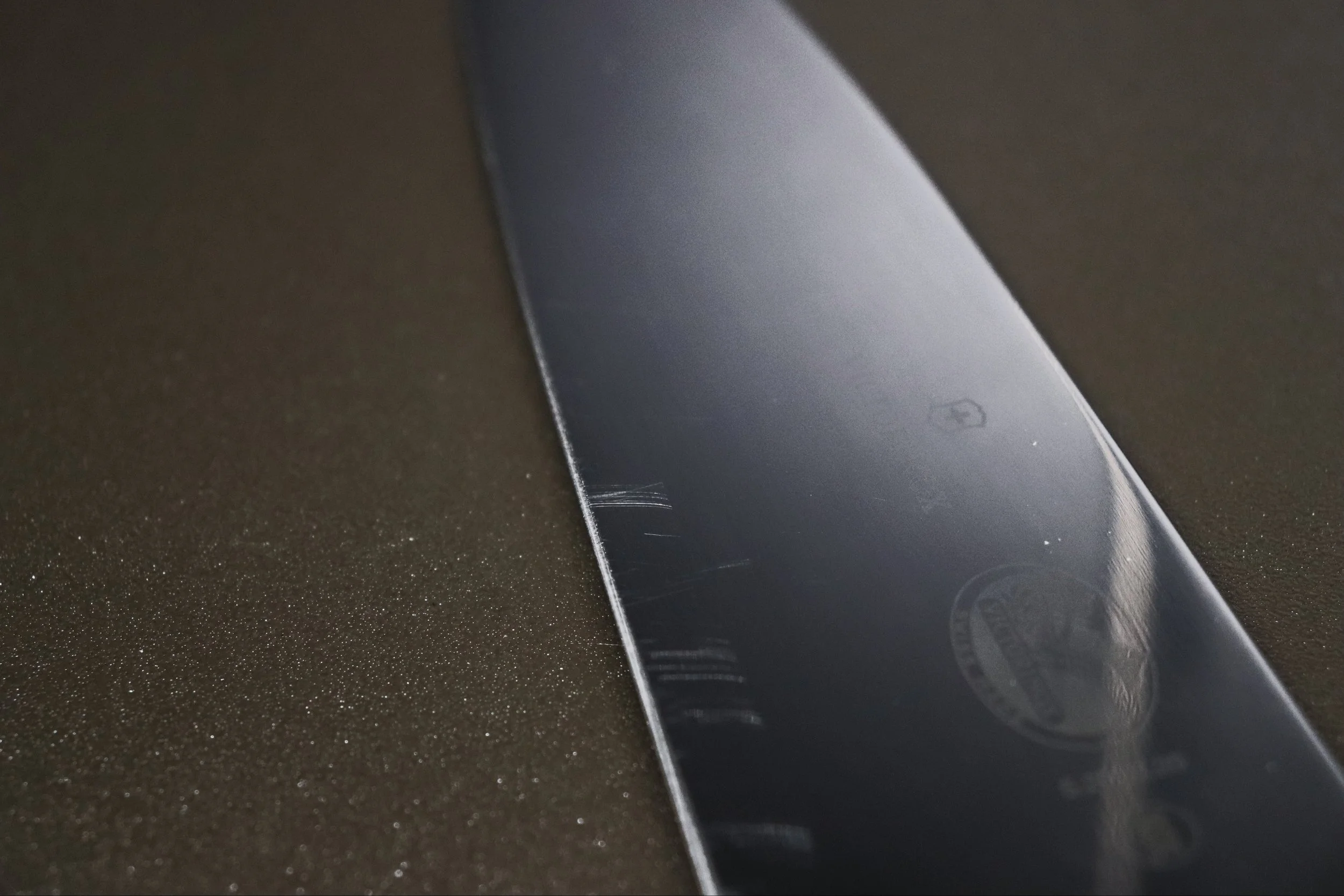
Standard kitchen knife grind geometry
What Does “Sharp” Mean for a Knife?
When people say a knife is sharp, they are usually describing how easily it begins a cut. That initial bite into the material comes from the apex—the very edge of the blade where both sides meet.
However, starting a cut is only part of the story. A knife that feels sharp at first can still struggle once it enters the material if the blade geometry behind the edge is too thick.
The Knife Apex Explained
The apex is the portion of the knife that comes to a point. This is what most people think of as the sharp part of the blade because it initiates the cut.
During sharpening, the apex is created by grinding both sides of the blade until they meet at a single point. This process usually produces a burr, which is then removed to leave behind a clean, continuous apex along the edge.
Without a distinct apex, a knife cannot be considered sharp—regardless of how thin the blade may be.
What Is Behind-the-Edge Thickness (BTE)?
Behind-the-edge thickness, commonly referred to as BTE, describes how thick the blade is immediately behind the apex.
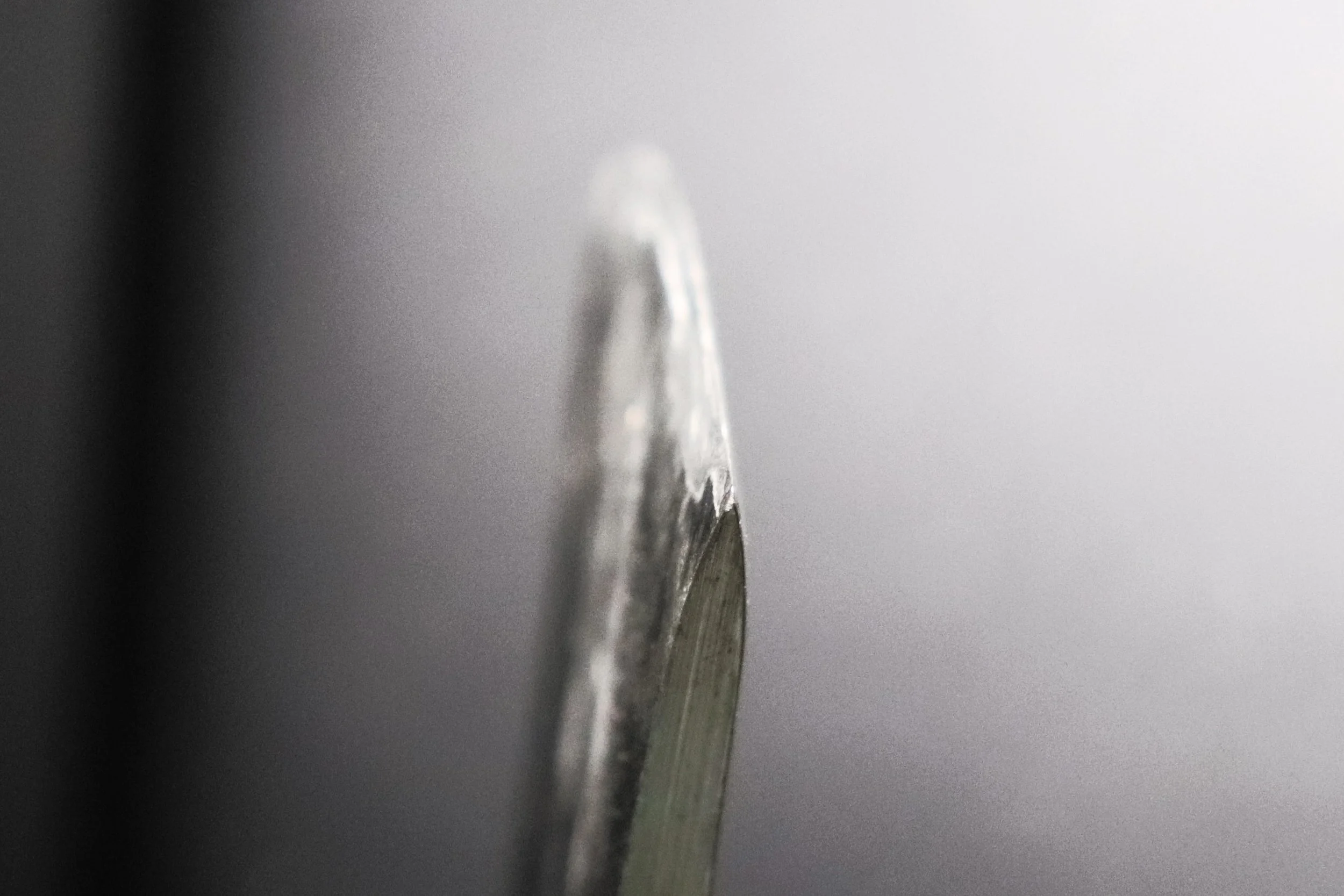
Close up of a small hatchet with a thick BTE
BTE is influenced by bevel angle, primary grind, and overall blade thickness.
When discussing blade thickness on its own, this refers to the thickest part of the knife—typically the spine or back of the blade.
Why Thin Knives Cut Better
For a knife to cut well beyond the initial contact, it must be thin enough to move through material without excessive resistance.
Paper is a useful example. Paper has no apex, yet it can still cut skin because it is extremely thin.
Sharpness vs Durability
Thicker knives are typically used for heavy tasks like butchering, where cutting through dense material places significant stress on the blade.
Thinner knives are preferred for tasks like filleting fish, where low resistance allows the blade to glide through soft material.
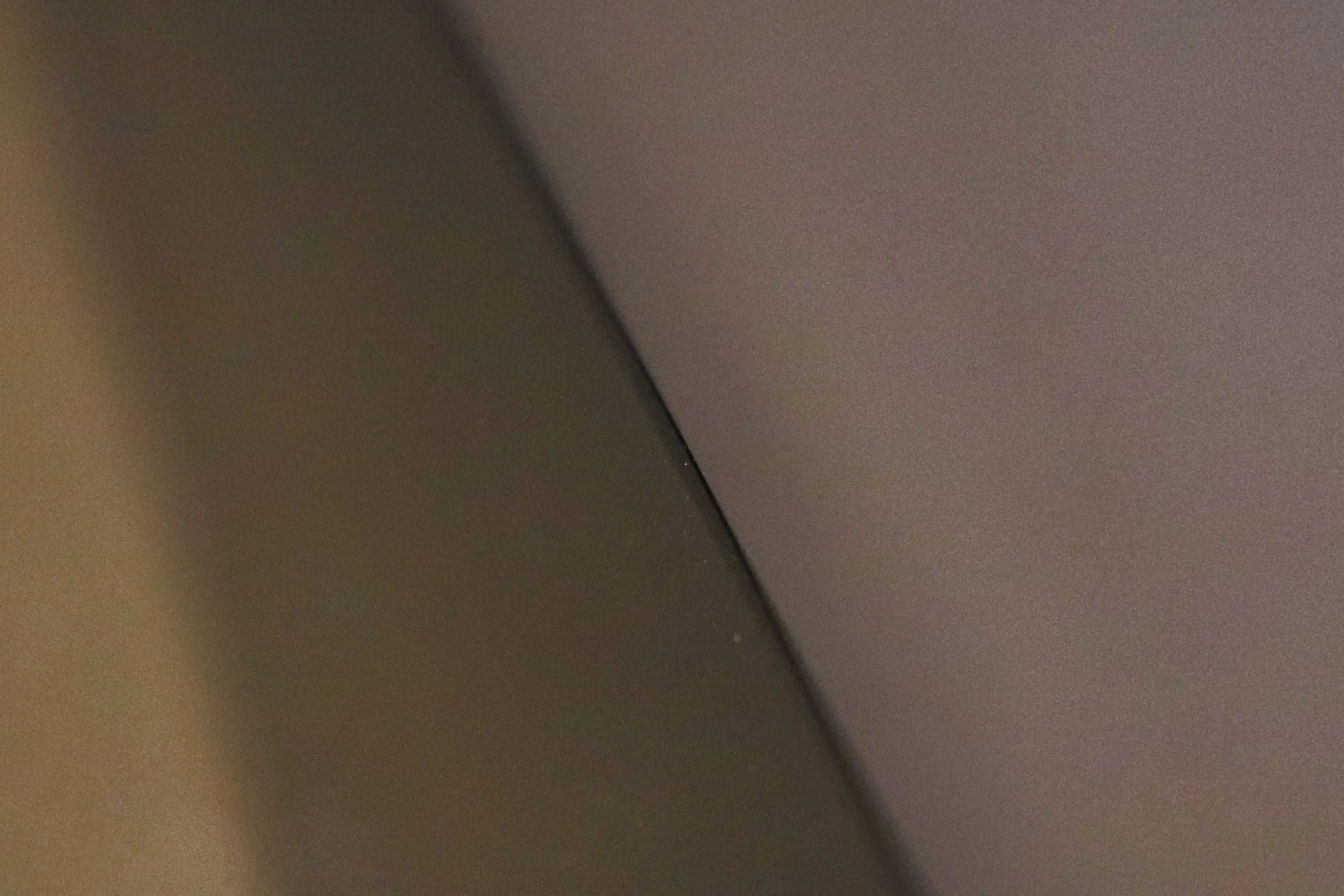
Knife close up showing a very thin BTE
How Blade Geometry Affects Cutting Performance
Blade geometry is a balance between apex sharpness, behind-the-edge thickness, overall blade thickness, and intended use.
This is why two knives can feel equally sharp at first yet perform very differently once cutting begins.