
Sharp vs Dull Knives: Which Is Safer and Why
A lot of people claim that a sharp knife is safer than a dull one. At first, that sounds backwards. If a knife is dull, won’t it be less likely to cut you? Wouldn’t a sharp knife be more dangerous?
A sharp knife is generally safer than a dull knife because it requires less force, offers more control, and cuts predictably instead of slipping or tearing.
To understand why this is the case, it helps to understand what makes a knife sharp. In short, sharpness is the combination of a thin blade and a distinct apex.
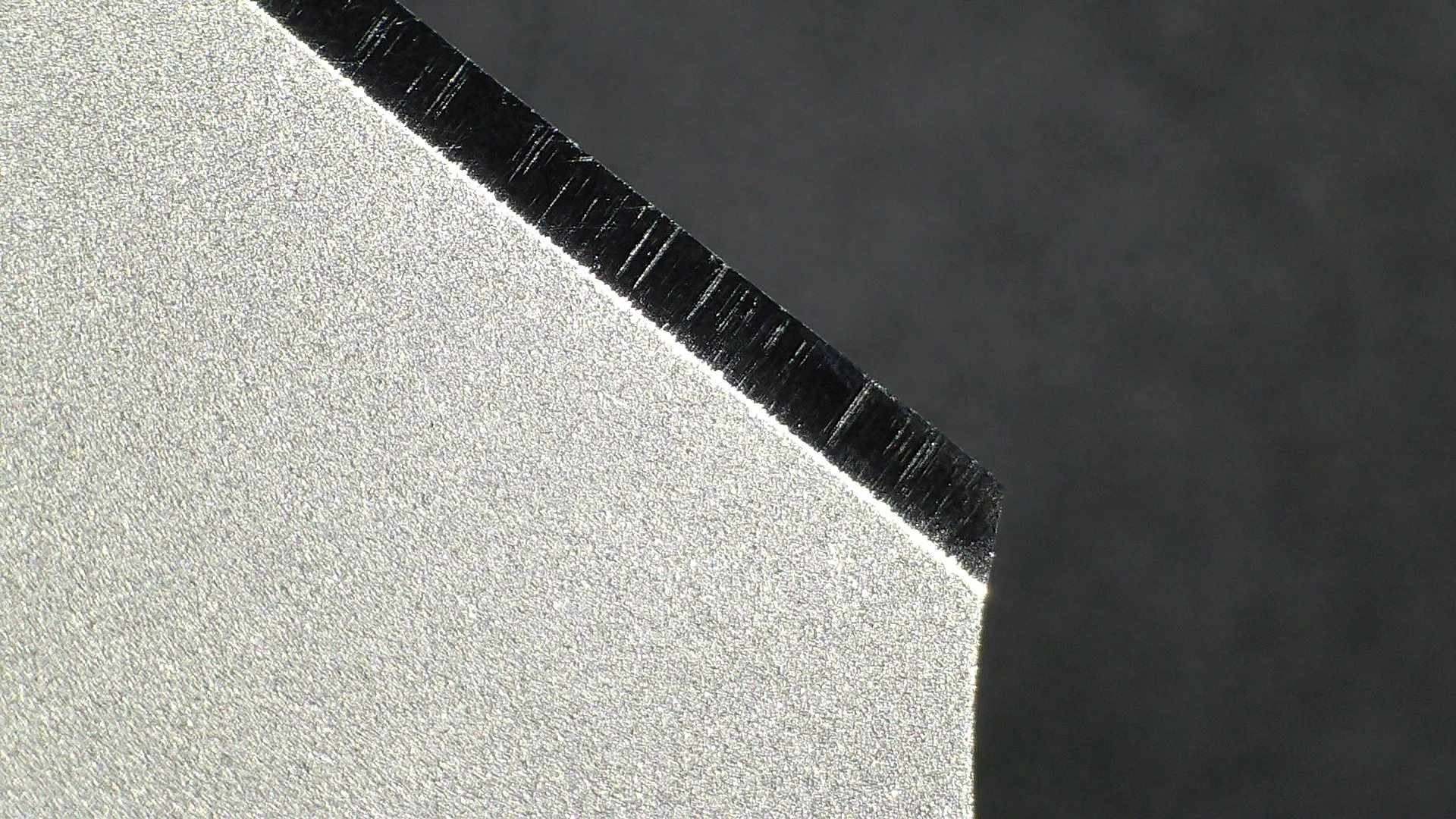
Knife edge under magnification
Why Sharp Knives Require Less Force
When a knife is sharp, it glides through food with minimal force. The cutting action is smooth, controlled, and repeatable.
Because the blade behaves predictably, there are fewer surprises during a cut, which significantly reduces the risk of accidents.
How Dull Knives Cause Slipping and Loss of Control
When a knife is dull, cutting often involves pulling, skipping, or forcing the blade through the material.
Think about pushing or pulling something with a lot of force. When it suddenly gives way, all that stored energy is released at once, causing a loss of control. A dull knife behaves in much the same way, increasing the likelihood of slips.
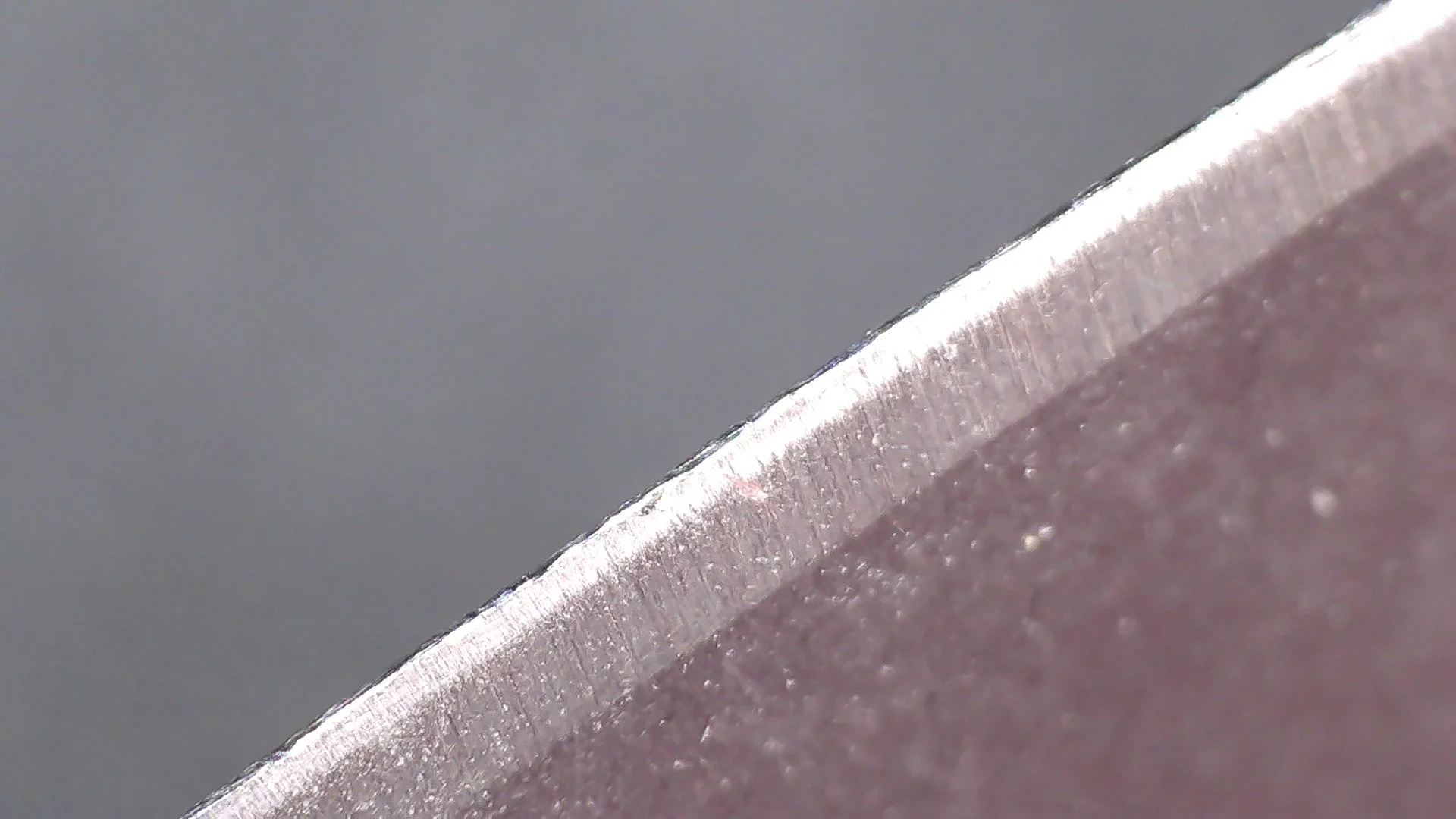
Magnified knife edge, edge dulled intentionally on concrete
Sharp vs Dull Cuts: Healing and Injury Severity
As a professional sharpener, I’ve seen firsthand that accidental nicks can happen with any blade if you’re careless.
A sharp knife cuts cleanly without tearing. In many cases, you don’t even feel it when it happens, and the wound tends to heal faster.
A dull knife can still cut you, but the injury is often worse. Dull blades tend to tear, resulting in jagged wounds that are more painful and take longer to heal.
How to Stay Safe When Using Sharp Knives
A sharp knife will absolutely cut you if you’re not careful—and so will a dull one.
Using a proper claw grip can help protect your fingers, but slowing down and paying attention to where your hands and the blade are is even more important.
When you’re finished using your knives, always store them safely so you don’t accidentally come into contact with the edge.